

After hours of precision cooking in a GIIP sous vide machine, your protein emerges perfectly tender—but pale and soft on the outside. That final step of high-heat finishing transforms good into extraordinary. Here’s everything you need to know about selecting and using a sous vide torch to complete your sous vide dishes.
Immediate Answer: Do You Really Need a Sous Vide Torch?
Yes, a torch is worth it for most serious sous vide users. After low and slow heat in your GIIP water bath, you need a way to create that signature crust. A sous vide searing torch delivers the quick sear required without overcooking the interior you spent hours perfecting.
That said, most people already own tools that work: a cast iron pan preheated to 450–500°F or an outdoor grill can produce a great sear. If you’re not ready to invest in a torch yet, these alternatives will get you there. However, using your stove for searing can be limited by venting or smoke issues—many kitchens struggle with inadequate ventilation, making it hard to achieve a proper sear without filling the space with smoke. Torches offer an excellent alternative, letting you get a great crust without the smoke problems associated with stove searing.
Where torches shine is in relatable, everyday use cases:
- Searing weeknight ribeye steaks cooked at 129°F (54°C) for 2 hours
- Crisping chicken thighs at 165°F (74°C) to golden perfection
- Finishing salmon at 125°F (52°C) with a light char
- Caramelizing sugars for brûlée-style desserts
A powerful sous vide torch complements GIIP’s 1100W–1400W circulators by delivering super fast Maillard browning without pushing the internal temperature past your target. GIIP focuses on complete sous vide systems—machines, vacuum bags, and finishing tools—not just standalone gadgets.
What Is a Sous Vide Torch and Why It Matters
A sous vide torch is a high-intensity culinary blow torch designed to brown food quickly after precision cooking in a water bath. Unlike the small pastry torches from 2010s home kitchens (mainly useful for creme brulee), these units deliver serious heat.
The core benefit is extreme surface temperature in seconds. Flame temperatures can reach up to 3500°F (1927°C), yet with proper technique, your interior temperature—set precisely on a GIIP machine at 54°C for steak—rises less than 5°F.
Typical tasks include:
- Steak and burger crusts
- Pork chops and lamb racks
- Crisping chicken skin
- Charring vegetables like peppers and onions
- Melting cheese on dishes
- Caramelizing sugar on custards
In professional kitchens and hotel banquets, torches speed up plating dramatically. When multiple GIIP commercial baths are running at once, using a torch at the pass station keeps service moving without sacrificing quality.
Why Searing After Sous Vide Is Non-Negotiable
Sous vide cooking—say, 2 hours at 58°C for steak—delivers edge-to-edge doneness. But it leaves the exterior pale and unappetizing. Without a final sear, even perfectly cooked ribeye, duck breast, or pork belly will taste flat and look underdone.
This is where the maillard reaction enters. Browning reactions occur above roughly 300°F (149°C), ideally 350°F or higher, creating hundreds of flavor compounds—pyrazines, furans, Strecker aldehydes—responsible for nutty, roasted, and meaty aromas. That nice crust isn’t just visual; it’s where the flavor lives.
A critical clarification: searing meat isn’t about “locking in juices.” That’s a myth. Sous vide already optimizes moisture retention through gentle cooking and collagen breakdown. Searing sous vide food is purely about surface color, aroma, and texture.
Example workflow: Cook chicken breast at 63°C for 1.5 hours in your GIIP machine. Remove, pat dry, then torch for 30–60 seconds until the skin turns golden. The interior stays juicy while the exterior delivers satisfying crunch.
Should You Pre-Sear, Post-Sear, or Both?
This debate has circled sous vide communities since at least 2015. Here’s what actually matters.
Pre-searing means browning meat before vacuum-sealing and cooking. It builds extra flavor layers via Maillard before the bag, but it risks uneven cooking and bag adhesion issues. Think of it as optional “bonus depth” rather than a replacement for the final sear.
Post-searing (after sous vide) is mandatory for crust. It alone achieves the glossy, crisp exterior you want after the water bath.
Practical recommendation: For everyday home cooking with GIIP machines, skip the pre-sear for simplicity. Focus your energy on a strong torch or hot pan finish. For restaurants and hotels, consider testing both approaches for signature dishes—pre-seared beef short ribs for banquets, then a final torch pass at service.
Ways to Sear Sous Vide Food (and Where a Torch Fits)
Multiple finishing tools exist, and a torch is one of several—often best when combined with a hot pan. Here’s how they rank:
| Method | Best For | Considerations |
|---|---|---|
| Cast iron skillet or carbon steel pan | Even steak crusts, everyday use | Requires preheating to 450–500°F, can produce smoke |
| Gas grill or charcoal | Smoky flavor, large batches | Slower preheat, less precise |
| Sous vide torch | Irregular shapes, touch-ups, tops while bottoms cook | Requires technique, fuel costs |
| Broiler | Large roasts | Less control, slower |
| Deep fry or smoker | Specialty dishes | Setup-intensive |
The cast iron pan is the default workhorse most GIIP users already own. It delivers excellent heat retention and an even crust on steaks with pan searing technique.
Grills—especially charcoal for outdoor use—add intense smoky notes but require longer preheat times. A gas grill works faster but still lacks the precision of a torch.
The torch excels when you need to:
- Hit uneven surfaces a pan can’t reach
- Brown tops while bottoms sear in a skillet
- Finish large roasts on a searing rack
- Avoid overcrowding a pan with multiple portions
Key Sous Vide Torch Buying Considerations
“Sous vide torch” is mostly a marketing term. What actually matters are heat output, flame control, and safety—not the label on the box. Use this as your buyer’s checklist.
Main factors to evaluate:
- Power output (BTU rating)
- Gas type (propane, butane, or MAP-Pro)
- Flame control and adjustable flame knob
- Ignition system (trigger-start preferred)
- Safety lock and safety features
- Build quality (metal vs. plastic)
- Intended environment (home vs. commercial)
GIIP doesn’t promote low-power decorative torches. We recommend powerful, stable units that match the precision of GIIP circulators. For B2B buyers, standardizing on 1–2 torch models chain-wide simplifies training and maintenance across locations.
Power Output and Heat Intensity
Steak searing benefits from temperatures in the 3500°F-class flame range. Small 2,500°F pastry torches work too slowly, risking overcooking edges due to prolonged exposure before the center is even browned.
For a 3–4 cm thick ribeye, look for torches rated high enough to finish both sides in under 90 seconds total. That means about 20–40 seconds per side with constant motion.
Higher power proves especially useful in commercial GIIP setups turning out dozens of portions during peak dinner service. When you’re pulling steaks from multiple baths, speed at the pass station matters.
Fuel Types: Propane, Butane, and MAP-Pro
All common culinary torch fuels are food-safe when properly combusted with a clean blue flame. The differences come down to heat output and availability.
Propane is the most practical choice for sous vide searing:
- Burns hot enough for thick steaks
- Inexpensive 14–16 oz cylinders available at any hardware store
- Clean, controllable combustion
Butane gas burns cooler:
- Great for creme brulee, cocktails, and delicate finishing
- Borderline for thick cuts unless using a specialized high-output head
- More portable canisters
MAP-Pro (propylene) burns 150–200°F hotter than propane:
- Fastest searing possible
- Pricier fuel
- Usually overkill for home cooking
Recommendation: For most GIIP customers, a propane torch offers the best balance of cost, power, and availability. Keep a backup propane tank for busy weeks.
Flame Shape, Color, and Control
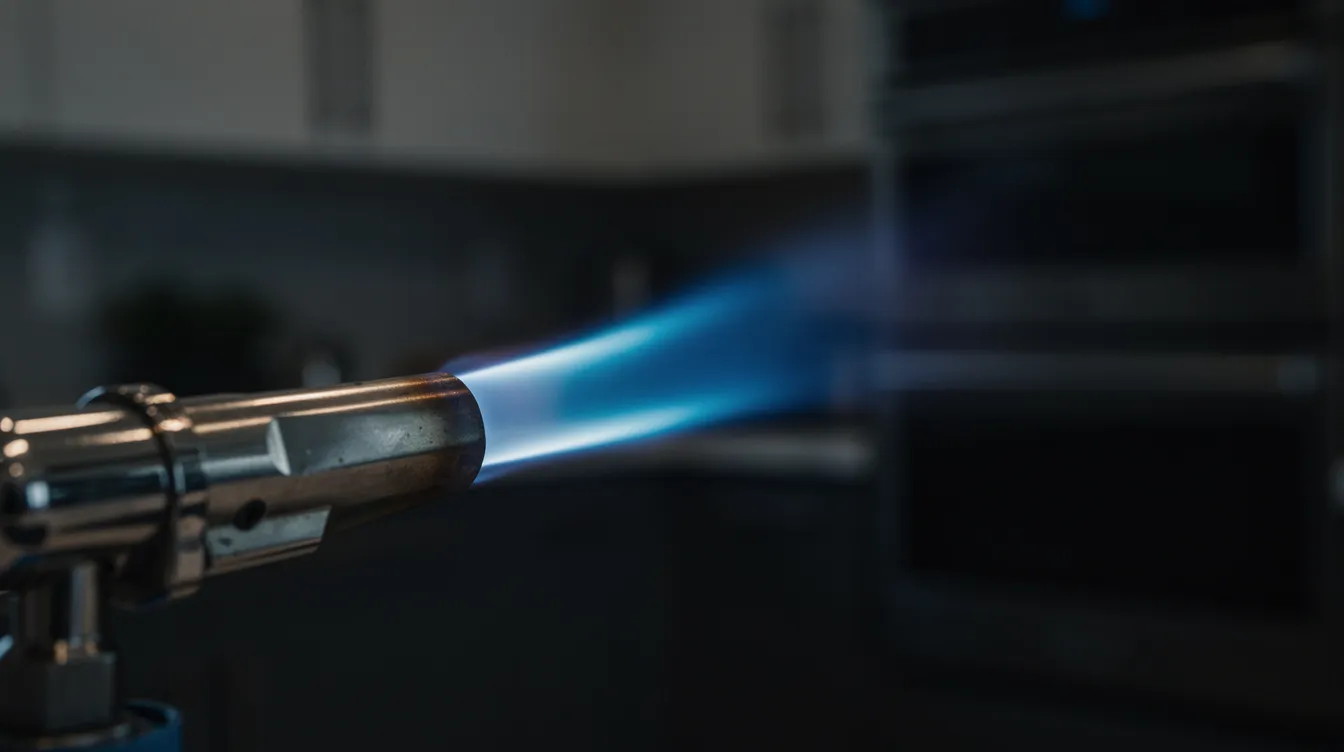
A fully oxidizing flame should be short, tight, dark blue, and slightly hissing. This clean burn minimizes soot and off-flavors.
Long yellow tips indicate incomplete combustion. Avoid searing with a sooty orange flame—it deposits carbon and creates unpleasant tastes.
Choose torches with adjustable flame knobs to swap between:
- Narrow, intense points for edges and fat caps
- Wider flames for flat surfaces like steak tops
Some users pair a standard gas torch with a wider-spreading head attachment for more even heat distribution across large roasts.
Ignition, Safety, and Build Quality
Quality-of-life features matter during extended searing sessions:
- Trigger-start ignition (piezo-electric) for one-handed lighting
- Safety lock to prevent accidental ignition
- Comfortable grip that doesn’t fatigue during service
- Stable base for setting down between uses
Avoid cheap, flimsy torch heads. Failures around open flame and pressurized gas are unacceptable in any kitchen. Look for stainless steel or high-grade alloy bodies, robust valves, and well-protected ignition systems.
For B2B readers: ensure compliance with local safety norms and integrate torch training alongside GIIP’s standard operating procedures.
Understanding and Avoiding “Torch Taste”
“Torch taste” refers to the slightly chemical or gassy off-flavor some cooks noticed when torches became popular in the 2010s. Controlled tests—including work by UC Davis food scientists—identified the real culprit: overheating and burn rather than the fuel itself.
When you hold a flame too close for too long, you carbonize fat and protein. This produces bitter polycyclic aromatic hydrocarbons that taste like “gas flavor.”
Actionable tips to avoid torch taste:
- Keep the flame moving constantly
- Maintain 3–5 cm distance from the surface
- Aim for deep golden brown, never black spots
- Use a proper blue flame, not yellow/orange
A clean propane flame and proper technique make torch-finished GIIP sous vide dishes taste as clean as pan-seared ones.
Proper Sous Vide Torch Technique (Step by Step)
Follow these steps for a perfect sear every time:
1. Dry thoroughly Pat proteins completely dry after removing from the GIIP bath. Use paper towels or, in restaurants, a short rack air-dry. Moisture is the enemy of browning.
2. Preheat pan if combining methods If using a hybrid approach, heat your cast iron on medium-high to around 450–480°F before adding the meat.
3. Light the torch away from food Point away, ignite, then adjust to a short, strong blue flame before aiming at the meat.
4. Maintain proper distance and motion Hold 3–5 cm from the surface. Sweep fast back and forth, covering all sides and edges without lingering. Constant motion prevents hot spots.
5. Time guidance
- Steaks: 20–40 seconds per side
- Thin fish or chicken wings: Less
- Large roasts on a rack: More, with periodic rotation
6. Rest and finish Let torched meat rest briefly. Optionally finish with bag juices or butter over the crust for gloss and a finishing touch of flavor.

Best Ways to Combine Torch With Other Searing Methods
The single best finish for many GIIP users is “pan sear + torch”—combining even browning with detailed touch-ups.
Typical workflow:
- Heat cast iron or carbon steel until smoking hot
- Sear steak 30–45 seconds per side for contact crust
- Pull from pan to searing rack
- Torch edges, fat caps, and any pale spots
This combo reduces overall pan time, limiting smoke in a small kitchen while protecting the precise doneness achieved in your sous vide bath.
Additional combinations:
- Torch + broiler: For large beef roasts, broiler provides ambient top heat while torch handles sides and thick fat caps
- Torch + grill: Grill grates create striped marks; torch completes top browning for presentation
- Station division: Busy professional kitchens can position one cook at pans and another with a torch at the pass to speed plating during rush service
Types of Sous Vide Torches on the Market
The marketplace has exploded with “powerful grill torch” and “culinary torch gun” products between 2020–2026. Here’s how to navigate the categories:
| Category | Best For | Power Level |
|---|---|---|
| Compact butane kitchen torch | Desserts, small areas | Low |
| Mid-size culinary torch gun | Home kitchens, most proteins | Medium-High |
| Full-size propane torch head | Restaurants, heavy searing | High |
| Multi-purpose BBQ torch | Outdoor cooking, fire starters | Variable |
Compact butane torches are budget-friendly but may struggle with thick cuts. Reserve these for creme brulee and quick melts.
Mid-size culinary guns hit the sweet spot for many homes: adjustable flame, one-touch ignition, ergonomic handles, compatible with standard fuel cans.
Heavy-duty propane heads (like Bernzomatic torches including the TS8000) deliver raw power. Popular for serious sous vide searing and restaurant use.
Home Kitchen vs Professional Kitchen Needs
Home cooks using a GIIP 1100W machine typically want a compact, safe torch that stores easily and works indoors without excessive smoke. Aesthetics matter when it lives on your counter.
Professional kitchens, hotel banqueting, and catering operations need torches that run for multiple hours per service without failure. Build quality and heat output take priority over looks.
Redundancy matters: Commercial buyers should keep backup torches and fuel cylinders alongside spare GIIP circulators to avoid downtime during service.
Match torch choice to ventilation: powerful propane models work best under strong commercial hoods. Smaller butane units may suit apartments with limited exhaust.
Advanced Sous Vide Torch Techniques and Recipes
Mastering advanced sous vide torch techniques can elevate your cooking from impressive to unforgettable. One of the most effective methods is the “pan sear + torch” approach. Start by searing your steak or protein in a hot cast iron pan to develop an even, flavorful crust. Then, use a sous vide searing torch to finish the job—targeting edges, fat caps, and any spots that need extra browning. This combination ensures a perfect sear without risking overcooking the interior, preserving the precise doneness achieved in your GIIP sous vide bath.
For best results, choose a torch with an adjustable flame, such as the Bernzomatic TS8000, which allows you to fine-tune the heat output for different sous vide dishes. A blue flame is essential—it signals a fully oxidizing burn, which helps prevent off-flavors and ensures a clean, caramelized crust. Move the blow torch in steady, sweeping motions about 3–5 cm from the surface to avoid burning or creating bitter notes.
Sous vide torches aren’t just for steaks. Try using your torch to add a finishing touch to seared scallops, crisp up chicken skin, or caramelize sugars on desserts like crème brûlée. For chicken, torching after pan searing can create an irresistibly crispy skin while keeping the meat juicy. For vegetables, a quick pass with the torch can add smoky depth and a beautiful char.
Experiment with different proteins and recipes—whether you’re aiming for a restaurant-quality steak, golden-brown chicken, or a perfectly caramelized dessert, the right torch technique will help you achieve a good sear and a stunning presentation every time.
Outdoor and Culinary Uses for Sous Vide Torches
Sous vide torches aren’t just confined to the kitchen—they’re equally at home outdoors, making them a versatile tool for any cooking enthusiast. A propane torch is especially well-suited for outdoor use, thanks to its portability, high heat output, and compatibility with standard propane tanks. Whether you’re camping, grilling in the backyard, or hosting a BBQ, a torch can help you achieve a perfect sear on steaks, burgers, or vegetables right at the grill.
When using a torch outdoors, always prioritize safety. Choose a model with a reliable safety lock to prevent accidental ignition, and keep a safe distance from flammable materials. The adjustable flame feature is invaluable for controlling the intensity of the heat, allowing you to adapt to different foods and outdoor conditions.
In addition to outdoor grilling, sous vide torches shine in a variety of culinary applications. Use a cast iron skillet or pan to start the sear, then finish with the torch for a restaurant-quality crust. Torches are also excellent for caramelizing sugars on desserts, melting cheese on burgers or casseroles, and adding a smoky finish to vegetables or meats. The ability to quickly crank up the surface temperature means you can achieve a beautiful crust without overcooking the interior.
Whether you’re finishing sous vide dishes on the patio or adding the final touch to a dinner party indoors, a quality torch with an adjustable flame and safety features will expand your cooking possibilities and help you deliver consistently delicious results.
How to Choose a Sous Vide Torch That Complements GIIP Equipment
GIIP’s precision philosophy extends beyond the water bath. Your torch should match: powerful but controllable, protecting the perfect doneness you’ve achieved.
Consider what you cook most:
- Steaks and chops → Prioritize power
- Fish and seafood → Prioritize fine control
- Primarily desserts → Smaller butane works
Choose torches with consistent performance matching GIIP’s reliability, particularly for 8–10 hour service windows. In commercial settings, your torch needs to produce the same results at hour eight as hour one.
Verify fuel availability in your region. Propane is sold at hardware stores, grocery chains, and convenience stores virtually everywhere. For outdoor use, standard propane tank connections work with many torch heads.
B2B clients: consult GIIP for OEM/ODM co-branded sous vide torch options that align with your existing custom baths and racks.
Safety, Maintenance, and Longevity
Torches combine open fire and pressurized gas. Safe operation is as critical as with any water-filled electrical appliance.
Basic safety habits:
- Check for leaks before each use
- Never point at people
- Keep away from flammables
- Switch off gas completely after use
- Point flame away during lighting
Regular maintenance:
- Wipe soot from nozzles weekly
- Check ignition for reliable spark
- Store fuel cylinders upright in cool, ventilated spaces
- Inspect hoses and connections monthly
Restaurants should include torch usage in formal kitchen safety training alongside GIIP sous vide HACCP protocols. Higher-quality torches cost more upfront but last longer and perform more consistently—just like higher-quality circulators.
Popular Sous Vide Torch Models to Consider
Choosing the right sous vide torch can make all the difference in achieving that coveted perfect sear. Among the most popular models is the Bernzomatic TS8000, renowned for its high-intensity flame, adjustable temperature control, and reliability—making it a favorite for both home cooks and professionals. For those seeking a more compact option, the Iwatani PRO2 butane torch is ideal for indoor use, offering portability and precise flame control for delicate tasks like caramelizing sugars or finishing seafood.
Another standout is the Searzall torch attachment, which transforms a standard torch’s single flame into a broader, infrared heat source. This innovation allows for more even browning and minimizes the risk of burning, making it a great choice for searing larger cuts or achieving a uniform crust on sous vide dishes.
When selecting a torch, consider your primary cooking environment and needs. Propane torches are excellent for outdoor use and high-heat applications, while butane torches are better suited for indoor kitchens and more delicate tasks. Look for models with an adjustable flame to give you precise control over the searing process, and prioritize safety features like a safety lock and stable base.
By matching your torch to your cooking style—whether you’re finishing steaks on the grill, caramelizing desserts, or adding a smoky touch to vegetables—you’ll be equipped to deliver restaurant-quality results with every sous vide creation.
GIIP: Building a Complete Sous Vide System (From Bath to Torch)
GIIP manufactures home and commercial sous vide machines, vacuum bags, and accessories designed to work as integrated systems.
GIIP product range includes:
- 1100W home machines for everyday cooking
- 1400W commercial units for restaurant volume
- WiFi/app control with scheduling
- Multiple tank sizes for restaurants and hotels
- Vacuum bags and pumps for proper sealing
For certain recipes, an ice bath can be used after sous vide cooking to rapidly lower the temperature of the meat before additional finishing steps like smoking. This helps prevent overcooking and ensures proper texture.
The sous vide torch represents the final piece in a GIIP system. The water bath delivers exact temperature. The vacuum equipment handles packaging. The torch or searing setup completes the crust.
GIIP maintains international certifications, waterproofing standards, and energy efficiency—and any torches recommended for GIIP kits must align with these professional standards. This isn’t just an enhanced version of hobby equipment; it’s precision food technology.
Ready to build your complete system? Contact GIIP for quotes on sous vide kits that include machines, bags, and recommended finishing tools. B2B buyers can explore OEM/ODM customization to create branded sous vide solutions for your operation.